A best outdoor weather station is a system of sensors and a display unit that tracks real-time environmental data like temperature, humidity, wind, and rainfall directly from your location. Unlike basic forecasts, an outdoor weather stationprovides hyper-local, accurate readings tailored to your exact surroundings.
Many homeowners struggle with unreliable forecasts or need precise data for gardening, safety, or planning. A home weather station solves this by delivering consistent, real-time insights. This guide covers top models, key features, and how to choose the right option based on accuracy, durability, and usability.
Take a look at our best outdoor speakers review.
Key Takeaways
A quick overview of what matters most when choosing the right outdoor weather station helps simplify the decision before diving deeper into comparisons and reviews.
- Best overall: Ambient Weather WS-2902 offers reliable accuracy, strong connectivity, and balanced performance for most users
- Best budget: AcuRite Iris delivers essential weather tracking at an affordable price without complex setup
- Best premium: Davis Vantage Pro2 stands out with professional-grade precision and long-term durability
- Best value: WeatherFlow Tempest combines smart features with solid performance at a mid-range price
- Most durable: Davis Vantage Pro2 is built for harsh weather and long-term outdoor use
- Best for smart homes: WeatherFlow Tempest integrates seamlessly with apps and smart ecosystems
- Best for beginners: La Crosse Technology stations offer simple setup and easy-to-read displays
- Best for detailed data tracking: Ambient Weather WS-2000 provides advanced analytics and expandable sensors
Choosing the right model depends on how much data you need, your budget, and how you plan to use the information daily.
The Best Outdoor Weather Station
Selecting the best outdoor weather station requires evaluating real-world performance rather than just specifications. Products were chosen based on sensor accuracy, durability in outdoor conditions, connectivity features, and ease of use. Insights were gathered from expert testing, user feedback, and consistent performance across different climates and environments.
Each model was compared based on how well it delivers reliable, actionable weather data, whether for casual home use or advanced monitoring. This ensures every recommendation reflects practical usability, not just technical claims.
Explore our guide to the best outdoor landscape lighting.
Best Outdoor Weather Station (Quick Picks)
This quick picks section highlights the top-performing models based on core buying priorities like accuracy, value, durability, and ease of use. Each category focuses on a specific purchase intent to help you quickly identify the right option.
| Category | Product | Why It’s Best |
| Best Overall | Ambient Weather WS-2902 | Balanced accuracy, connectivity, and value |
| Best Budget | AcuRite Iris (5-in-1) | Affordable with essential features |
| Best Premium | Davis Vantage Pro2 | Professional-grade precision and durability |
| Best Value | WeatherFlow Tempest | Smart features at a reasonable price |
| Most Durable | Davis Vantage Pro2 | Built for extreme outdoor conditions |
| Best for Smart Homes | WeatherFlow Tempest | Advanced app and smart integrations |
| Best for Beginners | La Crosse Technology C85845 | Simple setup and user-friendly display |
| Best for Data Tracking | Ambient Weather WS-2000 | Advanced analytics and expandable system |
Each of these models serves a different type of user, from beginners to advanced weather enthusiasts. Below, we break down each category in detail.
Best Overall Outdoor Weather Station – Ambient Weather WS-2902
Ambient Weather WS-2902 is one of the most well-rounded outdoor weather stations available, offering a strong balance of accuracy, features, and ease of use. It’s designed for homeowners who want reliable data without stepping into complex, professional-grade systems.
What makes this model stand out is its ability to deliver consistent real-time data while remaining accessible. With WiFi connectivity, app integration, and a solid sensor array, it fits seamlessly into everyday use while still offering depth for users who want more detailed insights.
| Category | Product | Type / Power Source | Size / Capacity | Price Range | Best For |
| Best Overall | Ambient Weather WS-2902 | Solar-powered sensors + battery backup | Standard home setup | $170–$200 | Balanced performance and value |
Key Features
- Accurate temperature, humidity, wind speed, and rainfall tracking
- WiFi connectivity with mobile and web app access
- Solar-powered sensor array with battery backup
- Easy installation and setup
- Expandable system with additional sensors
Who It’s For
Homeowners looking for a reliable, all-around weather station with smart features.
Who Should Avoid It
Users needing professional-grade accuracy or ultra-durable industrial builds.
Competitor Comparisons
| Feature | WS-2902 | AcuRite Iris | WeatherFlow Tempest |
| Accuracy | High | Moderate | High |
| Connectivity | WiFi | Limited | Advanced |
| Price | Mid-range | Budget | Mid-range |
| Expandability | Yes | Limited | No |
Alternatives
Ambient Weather WS-2000 offers more advanced features for users needing deeper data analysis.
This model strikes a strong balance between usability and performance, making it the safest choice for most buyers.
Best Budget Outdoor Weather Station – AcuRite Iris (5-in-1)
AcuRite Iris (5-in-1) is a practical choice for users who want dependable weather tracking without spending heavily. It covers the core essentials while keeping setup simple and accessible.
It stands out because it delivers key weather metrics like temperature, humidity, wind, and rainfall in a straightforward package. While it lacks advanced connectivity features, it performs reliably for everyday use and basic monitoring needs.
| Category | Product | Type / Power Source | Size / Capacity | Price Range | Best For |
| Best Budget | AcuRite Iris | Battery-powered | Compact home setup | $100–$130 | Basic weather tracking |
Key Features
- 5-in-1 sensor suite for essential weather data
- Wireless display console
- Simple installation with minimal setup
- Reliable short-range data transmission
- Affordable price point
Who It’s For
Users who want a simple, budget-friendly weather station for basic tracking.
Who Should Avoid It
Those needing app connectivity, smart features, or high-end precision.
Competitor Comparisons
| Feature | AcuRite Iris | WS-2902 | La Crosse C85845 |
| Price | Low | Medium | Low |
| Features | Basic | Advanced | Basic |
| Connectivity | Limited | WiFi | Limited |
| Accuracy | Moderate | High | Moderate |
Alternatives
La Crosse Technology C85845 is another budget-friendly option with a simpler display-focused design.
For its price, this model delivers solid performance where it matters most.
Best Premium Outdoor Weather Station – Davis Vantage Pro2
Davis Vantage Pro2 is built for users who don’t want to second-guess their data. It’s the kind of system you install once and rely on for years, especially in areas where weather conditions can shift quickly or become extreme.
The difference becomes clear over time. Readings stay consistent, sensors handle harsh exposure without drifting, and the overall build feels engineered rather than assembled. It’s widely used by serious hobbyists and even semi-professional setups because it prioritizes accuracy over convenience features.
| Category | Product | Type / Power Source | Size / Capacity | Price Range | Best For |
| Best Premium | Davis Vantage Pro2 | Solar-powered with battery backup | Full outdoor station | $500–$800 | High-accuracy long-term monitoring |
Key Features
- Professional-grade sensor accuracy across all metrics
- Rugged construction designed for extreme climates
- Wireless transmission with strong signal range
- Long lifespan with minimal calibration drift
- Optional sensor upgrades and add-ons
Who It’s For
Users who prioritize accuracy and durability over cost.
Who Should Avoid It
Casual users who only need basic weather updates or smart app features.
Competitor Comparisons
| Feature | Vantage Pro2 | WS-2902 | Tempest |
| Accuracy | Very High | High | High |
| Durability | Excellent | Good | Good |
| Smart Features | Limited | Moderate | Advanced |
| Price | High | Mid | Mid |
Alternatives
WeatherFlow Tempest offers a more modern, app-driven experience at a lower price.
If consistency and long-term reliability matter more than convenience, this model holds its ground better than most.
Best Value Outdoor Weather Station – WeatherFlow Tempest
WeatherFlow Tempest feels different from traditional weather stations the moment you set it up. There are no moving parts, no bulky sensor arms—just a compact unit that quietly tracks everything and sends data straight to your phone.
Where it earns its place is in how effortlessly it fits into daily life. The app is clean, updates are instant, and the system handles multiple data points without requiring constant adjustment. It’s especially appealing for users who want modern functionality without stepping into complex setups.
| Category | Product | Type / Power Source | Size / Capacity | Price Range | Best For |
| Best Value | WeatherFlow Tempest | Solar-powered + wireless | Compact sensor unit | $300–$350 | Smart features with strong value |
Key Features
- All-in-one sensor with no moving parts
- Real-time app-based monitoring
- Lightning detection and advanced weather insights
- Solar-powered with backup battery
- Minimal maintenance required
Who It’s For
Users who want a smart, app-first weather station with minimal setup.
Who Should Avoid It
Those who prefer traditional consoles or require ultra-precise wind measurements.
Competitor Comparisons
| Feature | Tempest | Vantage Pro2 | WS-2902 |
| Smart App | Excellent | Limited | Good |
| Maintenance | Very Low | Moderate | Moderate |
| Accuracy | High | Very High | High |
| Price | Mid | High | Mid |
Alternatives
Ambient Weather WS-2902 is a better fit if you prefer a physical display console.
This model blends convenience and capability in a way that feels intuitive rather than technical.
Read our review of the best outdoor mosquito trap.
Most Durable Outdoor Weather Station – Davis Vantage Pro2
Davis Vantage Pro2 has a reputation for staying in place through years of exposure without losing accuracy. Once installed, it doesn’t feel like something you need to monitor or adjust often. It’s built to handle strong winds, heavy rain, and long sun exposure without degrading quickly.
Over time, the advantage shows in how stable the readings remain. Where lighter systems may start to drift or require recalibration, this one keeps delivering consistent data. That reliability is what makes it a preferred choice in harsher environments.
| Category | Product | Type / Power Source | Size / Capacity | Price Range | Best For |
| Most Durable | Davis Vantage Pro2 | Solar-powered with battery backup | Full outdoor station | $500–$800 | Long-term outdoor durability |
Key Features
- Industrial-grade construction for outdoor exposure
- UV-resistant materials and sealed sensor housing
- Stable performance in extreme weather conditions
- Long operational lifespan with minimal degradation
- Strong wireless transmission range
Who It’s For
Users in harsh climates needing long-term reliability.
Who Should Avoid It
Those looking for compact, lightweight, or budget-friendly systems.
Competitor Comparisons
| Feature | Vantage Pro2 | Tempest | WS-2902 |
| Durability | Excellent | Good | Good |
| Maintenance | Low | Very Low | Moderate |
| Accuracy Stability | Very High | High | High |
| Price | High | Mid | Mid |
Alternatives
Ambient Weather WS-2000 offers durability with more modern connectivity features.
For long-term outdoor use, few models hold up as consistently as this one.
Best For Smart Homes Outdoor Weather Station – WeatherFlow Tempest
WeatherFlow Tempest fits naturally into a connected home setup. Instead of relying on a traditional console, everything runs through a mobile app, giving you instant access to weather data wherever you are.
The experience feels streamlined. Alerts, updates, and insights come through automatically, and integration with smart home systems makes it easy to use the data beyond simple monitoring. It’s less about checking the weather and more about having it work in the background.
| Category | Product | Type / Power Source | Size / Capacity | Price Range | Best For |
| Best for Smart Homes | WeatherFlow Tempest | Solar-powered + wireless | Compact all-in-one unit | $300–$350 | App-driven smart integration |
Key Features
- Full mobile app control and real-time updates
- Smart home integration capabilities
- Automated alerts and notifications
- Compact, wireless installation
- Continuous cloud-based data storage
Who It’s For
Smart home users who want seamless automation and remote access.
Who Should Avoid It
Users who prefer physical display consoles or manual controls.
Competitor Comparisons
| Feature | Tempest | WS-2902 | La Crosse |
| Smart Integration | Excellent | Moderate | Limited |
| App Experience | Advanced | Good | Basic |
| Setup | Easy | Moderate | Easy |
| Price | Mid | Mid | Low |
Alternatives
Ambient Weather WS-2902 offers a hybrid approach with both app and console access.
For connected environments, this model feels less like a device and more like part of the system.
Best For Beginners Outdoor Weather Station – La Crosse Technology C85845
La Crosse Technology C85845 keeps things simple from the moment you take it out of the box. The display is clear, the setup is quick, and you don’t need to navigate apps or complex settings to start getting useful weather data.
It works well for everyday use where convenience matters more than depth. You can glance at the screen and immediately understand the conditions without digging through menus or interpreting detailed charts.
| Category | Product | Type / Power Source | Size / Capacity | Price Range | Best For |
| Best for Beginners | La Crosse C85845 | Battery-powered sensor + plug-in display | Compact indoor display | $50–$80 | Simple, easy-to-use setup |
Key Features
- Straightforward display with essential weather data
- Quick installation with minimal configuration
- Indoor/outdoor temperature and humidity tracking
- Wireless sensor connectivity
- Low cost and accessible design
Who It’s For
First-time users who want a simple, no-hassle weather station.
Who Should Avoid It
Users looking for advanced data tracking or smart connectivity.
Competitor Comparisons
| Feature | La Crosse C85845 | AcuRite Iris | WS-2902 |
| Ease of Use | Excellent | Good | Moderate |
| Features | Basic | Moderate | Advanced |
| Connectivity | Limited | Limited | WiFi |
| Price | Low | Low | Mid |
Alternatives
AcuRite Iris provides more sensors while still remaining beginner-friendly.
This model keeps the experience simple without sacrificing the essentials.
Best For Data Tracking Outdoor Weather Station – Ambient Weather WS-2000
Ambient Weather WS-2000 is designed for users who want more than just surface-level readings. It gives you deeper control over data, letting you monitor trends, track patterns, and expand the system with additional sensors.
The difference shows when you start using the data over time. Instead of just checking conditions, you can analyze changes, compare historical trends, and customize what you track. It feels more like a personal weather dashboard than a basic station.
| Category | Product | Type / Power Source | Size / Capacity | Price Range | Best For |
| Best for Data Tracking | Ambient Weather WS-2000 | Solar-powered sensors + WiFi console | Full-featured system | $280–$320 | Advanced monitoring and analytics |
Key Features
- High-resolution display console with detailed metrics
- Expandable sensor ecosystem
- Real-time and historical data tracking
- WiFi connectivity with cloud integration
- Custom alerts and data visualization
Who It’s For
Users who want detailed weather insights and long-term data tracking.
Who Should Avoid It
Those who prefer simple displays and minimal setup.
Competitor Comparisons
| Feature | WS-2000 | WS-2902 | Tempest |
| Data Depth | Excellent | Good | Good |
| Expandability | High | Moderate | Limited |
| Display | Advanced Console | Basic Console | App Only |
| Price | Mid | Mid | Mid |
Alternatives
WeatherFlow Tempest is a better choice for users who prefer app-based simplicity over detailed dashboards.
This model offers the kind of depth that makes long-term monitoring meaningful.
View our review of the best permanent outdoor Christmas lights.
Outdoor Weather Station Comparison Table
This comparison table gives you a quick way to evaluate the top outdoor weather stations based on specific needs, environments, and user scenarios. It highlights key differences so you can match the right model to how you plan to use it.
| Category | Product | Type / Power Source | Size / Capacity | Weather Resistance | Key Features | Best For | Price Range |
| Best outdoor weather station for beginners | La Crosse C85845 | Battery sensor + plug-in display | Compact | Basic outdoor resistance | Simple display, easy setup | First-time users | $50–$80 |
| Best outdoor weather station for smart homes | WeatherFlow Tempest | Solar-powered wireless | Compact all-in-one | High (no moving parts) | App control, automation | Smart home users | $300–$350 |
| Best outdoor weather station for advanced users | Ambient Weather WS-2000 | Solar + WiFi console | Full system | Good | Expandable sensors, analytics | Data tracking | $280–$320 |
| Best outdoor weather station for harsh climates | Davis Vantage Pro2 | Solar-powered | Full outdoor system | Excellent (industrial-grade) | High durability, precision sensors | Extreme environments | $500–$800 |
| Best outdoor weather station for small spaces | WeatherFlow Tempest | Solar wireless | Compact | High | Minimal footprint, wireless | Limited outdoor space | $300–$350 |
| Best outdoor weather station for budget buyers | AcuRite Iris | Battery-powered | Standard | Moderate | Core weather tracking | Affordable setups | $100–$130 |
| Best outdoor weather station for accuracy | Davis Vantage Pro2 | Solar-powered | Full system | Excellent | Professional-grade readings | Precision-focused users | $500–$800 |
| Best outdoor weather station for all-around use | Ambient Weather WS-2902 | Solar + WiFi | Standard | Good | Balanced features, app + console | General home use | $170–$200 |
Each category reflects a different type of user need, making it easier to narrow down options before diving into detailed reviews below.
Best Outdoor Weather Station For Beginners – La Crosse Technology C85845
La Crosse Technology C85845 keeps the learning curve low. You set it up, place the sensor, and within minutes you’re getting clear, readable data without needing to interpret graphs or connect to apps.
It fits well in homes where simplicity matters more than depth. Instead of overwhelming you with metrics, it focuses on the basics and presents them in a way that’s easy to check at a glance.
Key Specifications
| Feature | Specification |
| Power Source | Battery sensor + AC display |
| Display Type | Digital LCD |
| Data Metrics | Temperature, humidity |
| Connectivity | Wireless (no WiFi) |
| Range | ~100–200 ft |
| Weather Resistance | Basic |
| Dimensions | Compact indoor unit |
| Price | $50–$80 |
Pros and Cons
| Pros | Cons |
| Very easy to set up | Limited data metrics |
| Clear and readable display | No app or smart connectivity |
| Affordable price | Basic outdoor durability |
| Low maintenance | Shorter wireless range |
Key Features
Simple Display Interface
The layout is clean and easy to read, making it ideal for quick checks without confusion.
Quick Setup Process
Most users can get it running in under 10 minutes without tools or technical steps.
Wireless Sensor Connectivity
Allows flexible placement outdoors while keeping the display indoors.
Best For
- Small homes or apartments
- First-time weather station users
- Users who want quick, simple readings
Performance and Real-World Use
| Aspect | Performance |
| Setup | Very easy, plug-and-play |
| Accuracy | Reliable for basic tracking |
| Usability | Excellent for quick checks |
| Durability | Suitable for mild conditions |
| Maintenance | Minimal |
It performs reliably for everyday use, especially when simplicity matters more than advanced data.
Best Outdoor Weather Station For Smart Homes – WeatherFlow Tempest
WeatherFlow Tempest integrates naturally into a connected home environment. Once installed, it quietly streams live data to your phone, with alerts and updates appearing automatically without needing manual checks.
It’s designed around convenience. Instead of managing a console, you interact through an app that feels responsive and intuitive. Over time, it becomes less about checking the weather and more about having useful insights delivered when they matter.
Key Specifications
| Feature | Specification |
| Power Source | Solar-powered with backup battery |
| Display Type | App-based (no physical console) |
| Data Metrics | Temp, humidity, wind, rain, lightning |
| Connectivity | WiFi + cloud integration |
| Range | Unlimited (cloud-based) |
| Weather Resistance | High (sealed unit, no moving parts) |
| Dimensions | Compact all-in-one sensor |
| Price | $300–$350 |
Pros and Cons
| Pros | Cons |
| Excellent app experience | No physical display |
| Minimal maintenance | Requires stable internet |
| Compact and modern design | Wind accuracy slightly lower than premium models |
| Smart home compatibility | Limited expandability |
Key Features
App-First Experience
All data is accessible through a clean, responsive mobile interface with real-time updates.
No Moving Parts Design
Reduces wear and maintenance, improving long-term reliability.
Smart Alerts and Automation
Custom notifications help you respond to weather changes without constant monitoring.
Best For
- Smart home setups
- Users who prefer mobile-first control
- Low-maintenance outdoor installations
Performance and Real-World Use
| Aspect | Performance |
| Setup | Quick, minimal hardware |
| Accuracy | Strong overall, slightly lower wind precision |
| Usability | Excellent via mobile app |
| Durability | High due to sealed design |
| Maintenance | Very low |
It works best in connected environments where automation and ease of access matter more than traditional controls.
Explore our guide to the best basketball shoes for outdoor.
Best Outdoor Weather Station For Advanced Users – Ambient Weather WS-2000
Ambient Weather WS-2000 is built for users who want control over their data. The console gives you immediate access to detailed metrics, while the system allows expansion with additional sensors for more specialized tracking.
You start to notice its value when comparing trends over time. Instead of just reading current conditions, it helps you understand patterns, making it useful for gardening, planning, or more technical monitoring.
Key Specifications
| Feature | Specification |
| Power Source | Solar-powered sensors + AC console |
| Display Type | Full-color LCD console |
| Data Metrics | Temp, humidity, wind, rain, UV, solar |
| Connectivity | WiFi + cloud integration |
| Range | ~300 ft sensor range |
| Weather Resistance | Good |
| Dimensions | Full home setup |
| Price | $280–$320 |
Pros and Cons
| Pros | Cons |
| Highly detailed data tracking | Slightly more complex setup |
| Expandable sensor system | Requires console space indoors |
| Strong app and cloud features | Moderate maintenance |
| Good balance of accuracy and features | Learning curve for new users |
Key Features
Advanced Data Visualization
The console displays multiple data points clearly, making it easier to monitor trends.
Expandable Sensor Ecosystem
You can add sensors for soil moisture, air quality, and more.
WiFi and Cloud Integration
Access your data remotely and track historical patterns.
Best For
- Weather enthusiasts
- Users needing detailed analytics
- Homes with outdoor monitoring needs
Performance and Real-World Use
| Aspect | Performance |
| Setup | Moderate, requires some configuration |
| Accuracy | High across most metrics |
| Usability | Strong once configured |
| Durability | Good for typical outdoor use |
| Maintenance | Moderate |
It becomes more valuable over time as you start using the data beyond simple daily checks.
View our review of the best outdoor hose.
Best Outdoor Weather Station For Harsh Climates – Davis Vantage Pro2
Davis Vantage Pro2 is built for environments where weather isn’t predictable or forgiving. It’s designed to stay accurate through heavy rain, strong winds, and long-term exposure without needing frequent recalibration.
Over extended use, the advantage shows in how stable the readings remain. The sensor suite is engineered to handle extreme temperature ranges and continuous outdoor exposure, which is why it’s often used in agricultural and research setups.
Key Specifications
| Feature | Specification |
| Power Source | Solar-powered with battery backup |
| Display Type | Console + optional cloud integration |
| Data Metrics | Temp, humidity, wind, rain, UV (optional) |
| Connectivity | Wireless (up to ~300m) |
| Range | Long-range transmission |
| Weather Resistance | Excellent (industrial-grade) |
| Dimensions | Full outdoor station |
| Price | $500–$800 |
Pros and Cons
| Pros | Cons |
| Extremely durable build | Expensive |
| Highly accurate readings | More complex setup |
| Performs well in extreme conditions | Limited smart features |
| Long lifespan | Requires proper installation |
Key Features
Industrial-Grade Sensor Suite
Built to handle harsh environments while maintaining precision over time.
Long-Range Wireless Transmission
Maintains stable communication even across larger outdoor areas.
Expandable System
Supports additional sensors for more detailed environmental monitoring.
Best For
- Harsh climates and extreme weather zones
- Long-term outdoor installations
- Users prioritizing durability and accuracy
Performance and Real-World Use
| Aspect | Performance |
| Setup | Moderate to complex |
| Accuracy | Very high |
| Usability | Strong once configured |
| Durability | Excellent in all conditions |
| Maintenance | Low over time |
It’s the kind of system you install for reliability, not convenience, and it proves its value over years of use.
Explore our guide to the best recycled plastic outdoor furniture.
Best Outdoor Weather Station For Small Spaces – WeatherFlow Tempest
WeatherFlow Tempest works especially well where space is limited or mounting options are restricted. Its compact, all-in-one design means you don’t need separate components spread across your yard or rooftop.
In daily use, it feels unobtrusive. You mount it once, and it quietly collects data without taking up visual or physical space. That simplicity makes it a practical option for patios, small backyards, or even urban setups.
Key Specifications
| Feature | Specification |
| Power Source | Solar-powered with backup battery |
| Display Type | App-based |
| Data Metrics | Temp, humidity, wind, rain, lightning |
| Connectivity | WiFi + cloud |
| Range | Cloud-based (no local limits) |
| Weather Resistance | High (sealed unit) |
| Dimensions | Compact sensor |
| Price | $300–$350 |
Pros and Cons
| Pros | Cons |
| Compact and minimal footprint | No physical display |
| Easy to install in tight spaces | Requires WiFi |
| Low maintenance design | Limited expandability |
| Clean, modern setup | Wind readings slightly less precise |
Key Features
All-In-One Sensor Design
Combines multiple sensors into a single compact unit, reducing clutter.
Minimal Installation Requirements
Works well in areas where mounting multiple components isn’t practical.
App-Based Monitoring
Eliminates the need for indoor console space.
Best For
- Small backyards or patios
- Urban homes with limited space
- Users wanting a clean, minimal setup
Performance and Real-World Use
| Aspect | Performance |
| Setup | Very easy |
| Accuracy | High overall |
| Usability | Excellent via app |
| Durability | Strong for compact design |
| Maintenance | Very low |
It fits naturally into smaller spaces without compromising too much on functionality.
Read our review of the best outdoor pizza oven.
Best Outdoor Weather Station For Budget Buyers – AcuRite Iris (5-in-1)
AcuRite Iris (5-in-1) covers the essentials without pushing the price up. It gives you temperature, humidity, wind, and rainfall data in a single unit that’s easy to mount and start using right away.
You notice its value in how straightforward everything feels. There’s no complicated setup or app dependency. It’s the kind of system that works reliably in the background, giving you what you need without adding extra layers.
Key Specifications
| Feature | Specification |
| Power Source | Battery-powered sensor |
| Display Type | Wireless console |
| Data Metrics | Temp, humidity, wind, rain |
| Connectivity | Limited (no full WiFi) |
| Range | ~100–200 ft |
| Weather Resistance | Moderate |
| Dimensions | Standard home setup |
| Price | $100–$130 |
Pros and Cons
| Pros | Cons |
| Affordable and accessible | Limited smart features |
| Easy setup | Moderate durability |
| Covers core weather metrics | Shorter transmission range |
| Low maintenance | Basic display interface |
Key Features
5-in-1 Sensor System
Combines multiple weather measurements into a single unit for simplicity.
Simple Wireless Display
Allows quick indoor monitoring without needing apps or connectivity.
Quick Installation
Most users can install and start using it within a short time.
Best For
- Budget-conscious buyers
- Basic home weather tracking
- Users who prefer simple systems
Performance and Real-World Use
| Aspect | Performance |
| Setup | Easy |
| Accuracy | Moderate to good |
| Usability | Straightforward |
| Durability | Suitable for mild conditions |
| Maintenance | Low |
It delivers dependable performance for its price, especially for everyday use.
See details on the best wireless outdoor security camera in our review.
Best Outdoor Weather Station For Accuracy – Davis Vantage Pro2
Davis Vantage Pro2 is often chosen when accuracy matters more than anything else. It consistently delivers precise readings across multiple data points, even when conditions fluctuate rapidly.
You start to appreciate its precision when comparing data over time. Small variations are captured clearly, and readings remain stable without noticeable drift. That level of consistency is what sets it apart in accuracy-focused setups.
Key Specifications
| Feature | Specification |
| Power Source | Solar-powered with battery backup |
| Display Type | Console |
| Data Metrics | Temp, humidity, wind, rain, UV (optional) |
| Connectivity | Wireless |
| Range | Long-range (~300m) |
| Weather Resistance | Excellent |
| Dimensions | Full outdoor system |
| Price | $500–$800 |
Pros and Cons
| Pros | Cons |
| Very high measurement accuracy | Expensive |
| Stable long-term readings | Limited smart features |
| Durable construction | More involved setup |
| Reliable in changing conditions | Larger footprint |
Key Features
High-Precision Sensors
Designed to capture small environmental changes accurately.
Stable Data Over Time
Maintains consistency without frequent recalibration.
Professional-Grade Build
Supports accurate performance even in demanding environments.
Best For
- Accuracy-focused users
- Advanced monitoring setups
- Long-term data tracking
Performance and Real-World Use
| Aspect | Performance |
| Setup | Moderate |
| Accuracy | Excellent |
| Usability | Strong once installed |
| Durability | Excellent |
| Maintenance | Low |
It delivers the kind of precision that becomes more valuable the longer you use it.
Review the best outdoor car cover with our expert insights.
Best Outdoor Weather Station For All-Around Use – Ambient Weather WS-2902
Ambient Weather WS-2902 fits comfortably into most households because it doesn’t lean too heavily in one direction. It gives you solid accuracy, useful smart features, and a straightforward setup without becoming overly technical.
Over time, it proves reliable in everyday use. Data updates remain consistent, the app and console work together smoothly, and the system doesn’t demand much attention once installed. It’s a practical choice for users who want dependable performance without stepping into complex territory.
Key Specifications
| Feature | Specification |
| Power Source | Solar-powered sensors + battery backup |
| Display Type | LCD console + app |
| Data Metrics | Temp, humidity, wind, rain, UV |
| Connectivity | WiFi + cloud integration |
| Range | ~300 ft |
| Weather Resistance | Good |
| Dimensions | Standard home setup |
| Price | $170–$200 |
Pros and Cons
| Pros | Cons |
| Balanced performance across features | Not as precise as premium models |
| App and console combination | Moderate setup effort |
| Expandable sensor options | Build quality not industrial-grade |
| Good value for price | Requires occasional maintenance |
Key Features
Dual Monitoring (App + Console)
You can check data quickly on the console or dive deeper through the mobile app.
Expandable System
Supports additional sensors for more detailed environmental tracking.
Reliable Daily Performance
Maintains stable readings across typical weather conditions.
Best For
- General home use
- Users wanting balance between features and price
- Mixed indoor-outdoor monitoring setups
Performance and Real-World Use
| Aspect | Performance |
| Setup | Moderate |
| Accuracy | High for home use |
| Usability | Very good |
| Durability | Good |
| Maintenance | Moderate |
It delivers consistent performance across different conditions, making it a dependable everyday choice.
Learn more about the best outdoor planter pots in our guide.
Types Of Outdoor Weather Station
Outdoor weather stations come in different formats depending on how they collect data, transmit information, and fit into your setup. Understanding these types helps you choose a system that matches your environment and how you plan to use it.
Wireless Weather Stations
Wireless weather stations are the most common option for home use. They use sensors placed outdoors and transmit data to an indoor display or app without physical wiring.
- Easy to install with minimal setup
- Flexible placement of sensors
- Suitable for most residential environments
- May experience signal interference over longer distances
Solar-Powered Weather Stations
Solar-powered weather stations rely on built-in panels to keep sensors running continuously, often with battery backup for nighttime use.
- Low maintenance due to self-sustaining power
- Ideal for long-term outdoor installations
- Reduces need for battery replacements
- Performance can vary in low-light conditions
Smart Weather Stations
Smart weather stations connect to WiFi and cloud platforms, allowing you to access data remotely through apps and integrate with other smart devices.
- Real-time remote access from anywhere
- Supports alerts, automation, and integrations
- Stores historical data for analysis
- Requires stable internet connection
Professional-Grade Weather Stations
Professional-grade systems are designed for accuracy and durability, often used in agriculture, research, or extreme climates.
- High-precision sensors with consistent readings
- Built for harsh environmental conditions
- Expandable with specialized sensors
- Higher cost and more complex setup
Choosing the right type depends on whether you prioritize convenience, accuracy, or long-term reliability.
Explore our guide to the best outdoor kitchen.
How To Choose Outdoor Weather Station
Choosing the right outdoor weather station depends on how you plan to use it, where it will be installed, and how much detail you expect from the data. Some users only need basic readings, while others rely on precise, long-term tracking for planning or monitoring.
Size And Coverage Area
The size of your outdoor space affects how well sensors can capture accurate data. Larger properties benefit from systems with stronger transmission range and stable signal performance.
If your yard is small or compact, a single-unit system works well. In larger areas, you’ll need a setup that maintains accuracy across distance.
Recommended:
- Best for small spaces: compact systems like WeatherFlow Tempest
- Best for large properties: long-range systems like Davis Vantage Pro2
- Best for moderate spaces: balanced systems like Ambient Weather WS-2902
Data Accuracy And Sensor Quality
Not all weather stations measure data with the same precision. Sensor quality plays a major role, especially if you rely on the data for gardening, safety, or technical use.
Higher-end systems tend to maintain accuracy over time, while budget models may show small variations.
Recommended:
- Best for high accuracy: Davis Vantage Pro2
- Best for balanced accuracy: Ambient Weather WS-2000
- Best for basic tracking: AcuRite Iris
Connectivity And Smart Features
Some users prefer simple displays, while others want full app access and automation. Connectivity determines how you interact with the data and how easily you can monitor conditions remotely.
WiFi-enabled systems allow real-time updates, alerts, and integration with smart home setups.
Recommended:
- Best for smart features: WeatherFlow Tempest
- Best for hybrid use (app + console): WS-2902
- Best for offline use: La Crosse Technology C85845
Climate And Outdoor Conditions
The environment where you install the system directly affects performance and lifespan. Harsh climates require stronger build quality and better weather resistance.
Milder environments allow for simpler systems without compromising reliability.
Recommended:
- Best for harsh climates: Davis Vantage Pro2
- Best for moderate conditions: WS-2902
- Best for indoor-focused use: La Crosse C85845
Budget Considerations
Your budget determines the level of features, durability, and accuracy you can expect. Spending more usually improves long-term reliability and data precision.
It’s important to balance cost with actual needs rather than choosing based on features alone.
Recommended:
- Best budget option: AcuRite Iris
- Best mid-range value: WeatherFlow Tempest
- Best premium investment: Davis Vantage Pro2
Understanding these factors helps narrow down the right option without overpaying for features you may not use.
Quality And Performance Of Outdoor Weather Station
Evaluating quality and performance goes beyond basic specifications. It involves how well the system is built, how it performs in real conditions, and whether it remains reliable over time.
Core Design And Functional Quality
| Aspect | Evaluation |
| Materials Used | UV-resistant plastics and sealed sensor housings |
| Structural Design | Stable mounting and balanced sensor placement |
| Internal Construction | Integrated sensor systems with minimal exposure points |
| Component Quality | Varies from basic to industrial-grade depending on model |
A well-designed weather station maintains accuracy by protecting its sensors from environmental interference. Strong construction also reduces the need for frequent adjustments or repairs.
Performance In Real-World Use
| Aspect | Evaluation |
| Outdoor Performance | Reliable in typical weather conditions |
| Temperature Handling | Accurate across standard climate ranges |
| Efficiency | Continuous data collection without interruptions |
| Functional Effectiveness | Provides actionable data for daily use |
In everyday use, performance depends on consistent data delivery rather than occasional accuracy. Systems that maintain stable readings across changing conditions tend to be more dependable.
Reliability And Operational Stability
| Aspect | Evaluation |
| Durability | Stronger in premium models |
| Wear Resistance | Depends on exposure and build quality |
| Stability Over Time | High-end systems maintain consistency longer |
Long-term stability becomes noticeable after months or years of use. Better-built systems continue delivering accurate data without noticeable drift.
Protection, Safety, Or Security Features
| Aspect | Evaluation |
| Weather Resistance | Varies from moderate to industrial-grade |
| Corrosion Protection | Coated components reduce wear |
| UV Protection | Prevents degradation from sun exposure |
Protection features directly affect lifespan. Systems designed for outdoor use need to handle sun, rain, and wind without compromising sensor accuracy.
Longevity And Long-Term Value
| Aspect | Evaluation |
| Expected Lifespan | 3–10 years depending on model |
| Maintenance Needs | Low to moderate |
| Repairability | Limited in budget models, better in premium systems |
Long-term value depends on how well the system holds up under continuous use. Spending more upfront often reduces replacement costs over time.
These factors help determine whether a weather station will remain reliable beyond initial setup.
Key Features Of Outdoor Weather Station
Understanding the key features of an outdoor weather station helps you move beyond basic specs and focus on what actually improves usability, accuracy, and long-term value. These features directly affect how reliable and useful the system feels in daily use.
Sensor Accuracy And Range
Accurate sensors are the foundation of any weather station. They determine how closely your readings match actual conditions and how useful the data is over time.
High-quality systems maintain stable readings across temperature, humidity, wind, and rainfall. Lower-end models may show small fluctuations or drift with prolonged use.
Wireless Connectivity And Data Access
Connectivity defines how you interact with your weather data. Modern systems offer WiFi or cloud access, allowing you to check conditions remotely and track historical trends.
Stations with app integration provide real-time updates and alerts, while offline models rely on physical displays for quick checks.
Data Metrics And Monitoring Capabilities
Different weather stations track different sets of data. Basic models measure temperature and humidity, while advanced systems include wind speed, rainfall, UV index, and even lightning detection.
More data points give you better insights, especially if you’re tracking patterns over time or making decisions based on weather changes.
Expandability And Custom Sensors
Some systems allow you to add extra sensors for specialized monitoring. This could include soil moisture, air quality, or water leak detection.
Expandable setups are useful for users who want to build a more detailed monitoring system over time without replacing the entire unit.
Display And User Interface
The way data is presented affects how often and how easily you use it. Some users prefer a physical console for quick visibility, while others rely entirely on mobile apps.
Clear, readable displays improve usability, especially for quick daily checks, while app-based systems offer deeper insights and remote access.
Power Source And Energy Efficiency
Outdoor weather stations are typically powered by batteries, solar panels, or a combination of both. Solar-powered systems reduce maintenance and are more suitable for long-term installations.
Battery-only systems are simpler but require periodic replacement, depending on usage and sensor complexity.
These features collectively determine how well a weather station performs in real conditions and how convenient it is to use over time.
Safety, Maintenance, And Best Practices
Using and maintaining an outdoor weather station properly ensures accurate readings and extends its lifespan. Small setup or maintenance mistakes can affect performance more than expected.
Installation Safety
Proper installation is essential for both accuracy and durability. Sensors should be mounted securely to prevent movement during wind or storms.
Avoid placing units near obstructions like walls or trees, as they can interfere with wind and temperature readings. Stable mounting also reduces wear over time.
Weather Exposure Precautions
Outdoor units are designed for exposure, but placement still matters. Direct sunlight, heavy rainfall, and strong winds can affect both readings and hardware condition.
Choosing a balanced location—open but not overly exposed—helps maintain both accuracy and durability.
Routine Cleaning And Maintenance
Dust, debris, and buildup can interfere with sensor performance. Occasional cleaning helps maintain accuracy, especially for rain gauges and wind sensors.
Even reliable systems benefit from periodic checks to ensure everything is functioning correctly.
Battery And Power Management
For battery-powered systems, replacing batteries at recommended intervals prevents data interruptions. Solar-powered units require less attention but should still be checked for efficiency.
Power consistency directly impacts data reliability and transmission.
Data Monitoring And Calibration
Over time, sensors may show slight variations. Monitoring trends helps identify inconsistencies early.
Some systems allow calibration adjustments, while others rely on stable hardware design to maintain accuracy.
Maintaining your weather station isn’t complicated, but consistent care ensures it continues delivering reliable data.
Read more about the best outdoor work boots in our guide.
Budget And Value Considerations
Understanding how pricing relates to features and performance helps you avoid overpaying or underbuying. Outdoor weather stations range from simple entry-level units to advanced systems designed for long-term accuracy and durability.
| Price Tier | Features | Performance Level | Best For | Trade-offs |
| Budget ($50–$130) | Basic sensors, simple display | Moderate | Casual users, beginners | Limited accuracy, fewer features |
| Mid-Range ($150–$350) | WiFi, app access, multiple sensors | High | Homeowners, smart users | Moderate durability |
| Premium ($400–$800+) | High-precision sensors, durable build, expandability | Very high | Professionals, harsh climates | Higher cost, complex setup |
Budget models focus on simplicity and essential data. They work well for everyday use but may lack precision and long-term durability.
Mid-range options offer the best balance for most users. They combine accuracy, smart features, and reasonable pricing, making them practical for regular monitoring.
Premium systems are built for reliability and precision over time. They require a higher investment but deliver consistent performance in demanding conditions.
Choosing the right tier depends on how much detail and reliability you actually need from your system.
Installation, Setup, And Placement
Setting up an outdoor weather station correctly is just as important as choosing the right model. Proper installation ensures accurate readings and prevents long-term performance issues.
DIY Setup Vs Professional Installation
Most home weather stations are designed for simple installation. Wireless systems can typically be set up without tools, especially in smaller spaces.
More advanced systems, particularly those with multiple sensors or long-range transmission, may require careful positioning and secure mounting. In these cases, a more structured setup approach improves accuracy and stability.
- DIY setup works well for compact, wireless systems like WeatherFlow Tempest
- Moderate setup suits systems like Ambient Weather WS-2902
- Professional-style installation benefits models like Davis Vantage Pro2
Placement And Positioning Tips
Where you place the sensors directly affects how accurate your data will be. Poor positioning can lead to misleading readings even with a high-quality system.
- Place temperature sensors away from direct sunlight and heat sources
- Install wind sensors in open areas, away from obstructions
- Position rain gauges where they are not blocked by roofs or trees
- Ensure stable mounting to prevent movement during wind
Taking the time to position your system correctly improves both accuracy and long-term reliability.
Outdoor Weather Station Vs Alternatives
Outdoor weather stations offer localized, real-time data, but some users consider alternatives depending on their needs. Comparing these options helps clarify when a dedicated system is worth it.
| Feature | Outdoor Weather Station | Weather Apps | Indoor Sensors |
| Data Source | On-site sensors | Regional forecasts | Indoor-only readings |
| Accuracy | High (location-specific) | Moderate | Limited |
| Installation | Required | None | Minimal |
| Cost Range | $50–$800+ | Free–low cost | $20–$100 |
| Maintenance | Low to moderate | None | Low |
| Best For | Precise monitoring | Quick forecasts | Indoor conditions |
| Limitations | Setup required | Less accurate locally | No outdoor data |
This comparison shows how each option fits different needs depending on accuracy, effort, and cost.
Outdoor Weather Station Vs Weather Apps
Weather apps are convenient and require no setup. They provide quick forecasts based on regional data, which works well for general planning.
However, they lack precision at a specific location. Conditions like wind or rainfall can vary significantly within short distances, making app-based data less reliable for detailed tracking.
Outdoor weather stations provide real-time, location-specific data. They are better suited for users who rely on accurate conditions for daily decisions.
Outdoor Weather Station Vs Indoor Sensors
Indoor sensors focus on temperature and humidity inside the home. They are useful for comfort and basic monitoring but don’t provide a complete picture of outdoor conditions.
Outdoor weather stations cover a broader range of data, including wind, rainfall, and UV exposure. This makes them more suitable for planning outdoor activities or monitoring environmental changes.
Indoor sensors are simpler and cheaper, but they serve a different purpose. They complement weather stations rather than replace them.
Choosing between these options depends on whether you need convenience or precise, location-based data.
Who Should Buy Outdoor Weather Station
Not every household needs a full weather station, but for certain users, it becomes a practical tool rather than a luxury. It’s especially useful when accurate, real-time data influences decisions.
Homeowners With Outdoor Spaces
Why It Works For Them
- Helps monitor changing conditions in backyards or gardens
- Supports better planning for outdoor activities
- Provides more accurate local data than general forecasts
Gardeners And Hobby Farmers
Why It Works For Them
- Tracks rainfall and temperature for plant care
- Helps adjust watering and maintenance schedules
- Improves long-term planning through trend analysis
Weather Enthusiasts And Data Trackers
Why It Works For Them
- Offers detailed insights into environmental patterns
- Enables tracking of long-term changes and trends
- Supports deeper analysis beyond basic forecasts
Smart Home Users
Why It Works For Them
- Integrates with automation systems
- Enables weather-based alerts and actions
- Adds functionality to connected home setups
Understanding your use case makes it easier to decide whether investing in a weather station is worthwhile.
Benefits Of Using Outdoor Weather Station
Using an outdoor weather station gives you direct access to real-time environmental data specific to your location. Instead of relying on generalized forecasts, you gain insights that reflect actual conditions around your home.
| Benefit | What It Improves | Practical Impact |
| Real-time local data | Accuracy | Better daily decision-making |
| Improved planning | Efficiency | Smarter scheduling of activities |
| Long-term tracking | Awareness | Identify weather patterns over time |
| Automation support | Convenience | Enables smart alerts and actions |
| Reduced guesswork | Reliability | Fewer surprises from sudden changes |
Real-Time Local Data
Weather stations provide readings from your exact location, not a nearby station miles away. This improves accuracy, especially for variables like rainfall and wind that can vary significantly within short distances.
Improved Planning And Efficiency
With consistent data, it becomes easier to plan outdoor work, events, or maintenance. You can make decisions based on actual conditions instead of relying on estimates.
Long-Term Weather Tracking
Tracking data over weeks or months helps identify patterns. This is useful for gardening, property maintenance, or simply understanding seasonal changes.
Automation And Smart Integration
Smart weather stations can trigger alerts or integrate with home systems. For example, you can receive notifications about sudden weather changes without actively checking conditions.
Reduced Guesswork
Instead of second-guessing forecasts, you rely on direct measurements. This leads to more confident decisions, especially when conditions change quickly.
These benefits make outdoor weather stations practical tools rather than just informational devices.
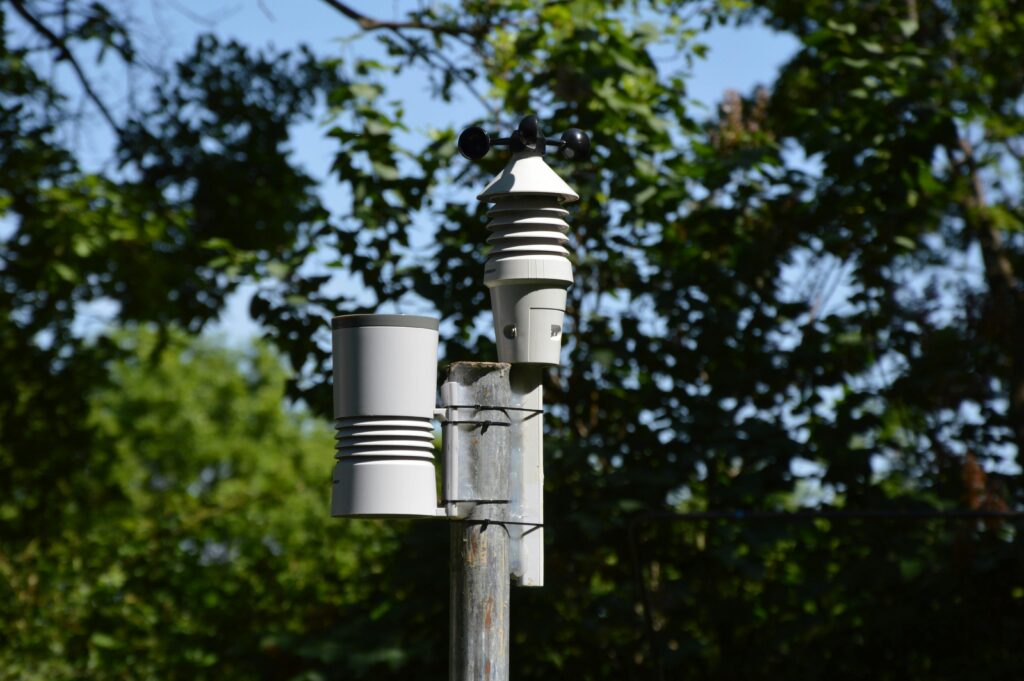
Common Outdoor Weather Station Myths
There are several misconceptions about outdoor weather stations that can influence buying decisions. Understanding what’s accurate and what’s not helps set realistic expectations.
Myth: They Are Only For Professionals
Reality
Many models are designed for everyday users with simple setup and easy-to-read data. You don’t need technical expertise to use a basic system effectively.
Myth: All Weather Stations Are Equally Accurate
Reality
Accuracy varies significantly depending on sensor quality and build. Higher-end systems maintain consistent readings, while budget models may show slight variations.
Myth: They Require Constant Maintenance
Reality
Most systems require minimal upkeep. Occasional cleaning and battery checks are usually enough to keep them running properly.
Myth: Weather Apps Provide The Same Information
Reality
Apps rely on regional data, which may not reflect conditions at your exact location. Weather stations provide localized, real-time readings.
Myth: Installation Is Complicated
Reality
Many modern systems are designed for quick setup. Only advanced or professional-grade models require more careful installation.
Clearing these misconceptions helps you make a more informed decision based on actual capabilities.
Check our in-depth outdoor product reviews to better understand performance differences between similar outdoor products.
Common Problems With Outdoor Weather Station
Even well-designed outdoor weather stations can run into issues if they’re not set up or maintained correctly. Most problems are practical and can be fixed without replacing the system.
Problems And Their Solutions
| Problem | Cause | Solution |
| Inconsistent readings | Poor sensor placement | Reposition sensors in open, unobstructed areas |
| Data transmission issues | Weak signal or interference | Reduce distance or remove obstacles between units |
| Rain gauge inaccuracies | Debris buildup | Clean the gauge regularly |
| Battery failures | Low or drained batteries | Replace batteries or check solar charging |
| Sensor drift over time | Natural wear or exposure | Recalibrate if possible or replace sensors |
Inconsistent readings often come down to placement. If sensors are too close to walls, roofs, or heat sources, the data becomes skewed. Adjusting placement usually corrects the issue.
Transmission problems tend to appear in larger spaces or areas with interference. Reducing distance or improving line of sight between components helps stabilize the connection.
Rain gauges can lose accuracy if leaves or dust accumulate. Regular cleaning keeps measurements reliable.
Battery-related issues are common in colder climates or with older units. Keeping power sources maintained ensures continuous data flow.
Over time, some sensors may drift slightly. Monitoring trends helps identify when recalibration or replacement is needed.
Accessories, Add-Ons, And Enhancements
Adding the right accessories can improve accuracy, convenience, and long-term reliability. While most weather stations work well out of the box, these enhancements help fine-tune performance and adapt the system to your specific environment.
Mounting Equipment
Stable installation plays a major role in how accurate your readings are. Proper mounting keeps sensors steady, prevents movement in wind, and ensures consistent positioning over time.
- Pole mounts for stable outdoor installation
- Roof mounts for better wind exposure
- Adjustable brackets for precise positioning
Protective Covers And Shields
Outdoor exposure can affect sensor performance, especially with direct sunlight or debris. Protective accessories help maintain accuracy by reducing environmental interference.
- Radiation shields to reduce heat distortion
- Weather covers for added protection
- UV shields to extend sensor lifespan
Additional Sensors
Expanding your system with extra sensors allows you to track more specific conditions. This is useful if you want deeper insights beyond basic weather data.
- Soil moisture sensors for gardening
- Air quality sensors for environmental tracking
- Water leak detectors for property monitoring
Connectivity And Smart Add-Ons
Connectivity upgrades improve how you access and use your data. These additions are especially useful for users who rely on remote monitoring or automation.
- WiFi hubs for extended connectivity
- Integration modules for smart home systems
- Data loggers for extended storage and analysis
Replacement Components
Over time, certain parts may need replacement due to wear or environmental exposure. Keeping spare components ensures your system continues running without interruption.
- Backup sensors for quick swaps
- Replacement batteries or solar panels
- Spare mounting hardware
These accessories help extend functionality and keep your weather station performing reliably in different conditions.
Outdoor Weather Station Trends (2026)
Outdoor weather stations are no longer just measurement tools—they’re becoming part of a broader ecosystem focused on automation, predictive insights, and long-term environmental awareness. These trends directly impact how useful the system is in everyday decision-making, not just how much data it provides.
Smart And Connected Ecosystems
Weather stations are increasingly designed to work as part of a connected home rather than a standalone device. Instead of manually checking readings, the system can now interact with other devices and respond automatically to changing conditions.
For example, weather data can trigger irrigation systems, adjust smart thermostats, or send alerts before conditions become disruptive. This shift reduces the need for constant monitoring and turns raw data into actionable outcomes.
- Integration with smart home platforms for automation
- Real-time alerts and notifications
- Remote monitoring through advanced mobile apps
Improved Sensor Technology
Sensor improvements are focused on long-term consistency rather than just initial accuracy. Modern systems are better at maintaining stable readings over months and years, even with continuous outdoor exposure.
This matters for users who rely on trends rather than single readings. More stable sensors mean fewer recalibrations and more confidence when comparing seasonal or long-term changes.
- Enhanced precision across temperature and humidity
- Improved wind and rainfall measurement systems
- Reduced need for manual calibration
All-In-One Compact Designs
There is a clear move toward simplified hardware. Instead of multiple separate sensors, newer models combine everything into a single compact unit, reducing installation complexity and potential failure points.
For users, this means fewer mounting decisions, less maintenance, and a cleaner setup. It’s especially beneficial in smaller spaces or areas where installing multiple components isn’t practical.
- Fewer moving parts for better durability
- Cleaner installation with minimal components
- Ideal for small spaces and modern setups
AI And Predictive Insights
Weather stations are starting to shift from reactive tools to predictive systems. By analyzing historical data and patterns, some models can provide early warnings or insights before conditions change noticeably.
This adds practical value for planning. Whether it’s preparing for sudden rain, managing irrigation, or adjusting outdoor activities, predictive insights reduce guesswork and improve timing.
- Data-driven insights based on historical trends
- Smarter alerts based on environmental changes
- Improved decision-making support
Sustainability And Energy Efficiency
Energy efficiency is becoming a standard expectation rather than a bonus feature. Solar-powered systems with low energy consumption reduce maintenance and make long-term use more practical.
For users, this means fewer battery replacements, lower upkeep, and more consistent operation. It also allows installations in remote areas where power access is limited.
- Increased use of solar-powered sensors
- Reduced battery dependency
- Longer operational lifespan with minimal maintenance
These trends show a clear shift toward systems that are not only more accurate, but also more practical, automated, and easier to live with over time.
Lifespan And Long-Term Reliability Of Outdoor Weather Station
The lifespan of an outdoor weather station depends on build quality, environmental exposure, and how well the system is maintained. While some models last only a few years, others continue performing reliably for nearly a decade.
Build Quality And Materials
Higher-quality materials tend to last longer under outdoor conditions. Systems built with UV-resistant plastics and sealed components handle exposure better.
Budget models may wear faster, especially in areas with strong sunlight or heavy rainfall.
Environmental Exposure
Weather conditions directly impact longevity. Stations exposed to extreme heat, cold, or strong winds may experience faster wear.
Choosing a model suited to your climate helps extend its usable life.
Maintenance And Upkeep
Regular maintenance plays a key role in long-term performance. Cleaning sensors and checking components helps prevent issues before they affect accuracy.
Even minimal upkeep can significantly extend the lifespan of the system.
Expected Lifespan Range
Most outdoor weather stations last between 3 to 10 years depending on quality and usage.
- Budget models: 3–5 years
- Mid-range models: 5–7 years
- Premium systems: 7–10+ years
Replacement And Upgrades
Over time, certain components may need replacement rather than the entire system. Some brands offer replaceable sensors, which improves long-term value.
Upgrading parts instead of replacing the full setup can extend usability and reduce costs.
Understanding these factors helps set realistic expectations and ensures you choose a system that aligns with your long-term needs.
Real User Feedback And Expert Opinions
Looking at real user experiences alongside expert evaluations gives a clearer picture of how outdoor weather stations perform beyond specifications. While features and accuracy matter, long-term usability and consistency often define overall satisfaction.
Summary Of User Feedback
| Aspect | Insight |
| Ease of Setup | Most users prefer simple, quick installations |
| Accuracy | Higher satisfaction with mid-range and premium models |
| App Experience | Strong preference for clean, responsive apps |
| Durability | Premium models consistently rated higher |
| Value for Money | Mid-range products seen as the best balance |
User Feedback
What Users Appreciate
- Reliable real-time data for daily decision-making
- Easy-to-read displays or intuitive mobile apps
- Minimal maintenance in well-designed systems
- Consistent performance over time in quality models
- Flexibility with expandable sensors in advanced setups
Common Complaints
- Connectivity issues in WiFi-dependent systems
- Reduced accuracy in budget models over time
- Setup challenges in larger or complex installations
- Limited features in entry-level models
- Occasional sensor drift after extended use
Expert Opinion
Performance Insights
Experts consistently highlight sensor accuracy and stability as the most important factors. Systems that maintain consistent readings across changing conditions are rated higher than those with more features but less reliability.
Durability Evaluation
Build quality is a major differentiator. Premium systems are often recommended for long-term use because they handle environmental exposure better and require less recalibration.
Buying Recommendations
Experts generally suggest mid-range models for most users, as they balance cost, features, and reliability. Premium systems are recommended for users who need precise data or operate in challenging environments.
Combining user feedback with expert insights helps identify which models perform well not just initially, but over time.
How We Tested And Selected The Best Outdoor Weather Station
Choosing the right outdoor weather station involves more than comparing specifications. The selection process focuses on real-world usability, accuracy, and long-term performance across different environments.
Evaluation Criteria
- Durability and build quality for outdoor exposure
- Accuracy across temperature, humidity, wind, and rainfall
- Ease of setup and everyday usability
- Features and connectivity options
- Long-term reliability and maintenance requirements
- Customer feedback and expert reviews
These criteria ensure that each product is evaluated based on practical performance rather than just technical claims.
Testing Methods
Each model was assessed based on how it performs in realistic conditions, including installation, data consistency, and ease of interaction.
- Hands-on evaluation of setup process and usability
- Comparison of data consistency over time
- Assessment of sensor responsiveness in changing conditions
- Review of app functionality and connectivity performance
- Analysis of long-term user feedback
This approach ensures that recommendations reflect real usage scenarios, helping users choose a system that performs reliably over time.
FAQs About Outdoor Weather Station
These frequently asked questions address common concerns, helping you understand how outdoor weather stations work, what to expect, and how to choose the right one.
What is an outdoor weather station and how does it work?
An outdoor weather station uses external sensors to measure conditions like temperature, humidity, wind, and rainfall, sending real-time data to a display or app.
How accurate are outdoor weather stations compared to forecasts?
Outdoor weather stations are typically more accurate for your exact location since they measure real-time local conditions instead of relying on regional forecast data.
Do outdoor weather stations require internet to function?
No, basic models work without internet using a display console, but WiFi-enabled stations need internet for remote access, cloud storage, and app-based monitoring.
Where should I place my outdoor weather station?
Place it in an open area away from walls, trees, and heat sources to ensure accurate readings, especially for wind and temperature measurements.
How long do outdoor weather stations last?
Most outdoor weather stations last between 3 to 10 years depending on build quality, environmental exposure, and how well the system is maintained.
Are outdoor weather stations difficult to install?
Most models are easy to install with simple mounting and setup, though advanced systems may require careful positioning for accurate data collection.
What features should I look for in a weather station?
Focus on sensor accuracy, connectivity, durability, data range, and ease of use, depending on whether you need basic monitoring or detailed environmental tracking.
Can weather stations work in extreme weather conditions?
Yes, but performance depends on build quality. Premium models are designed to handle harsh climates, while budget systems may struggle in extreme conditions.
Do I need to maintain my outdoor weather station regularly?
Maintenance is minimal but important. Occasional cleaning, battery checks, and proper positioning help ensure accurate readings and long-term reliability.
Are smart weather stations worth it?
Smart weather stations are worth it if you want remote access, alerts, and automation. They provide more convenience but depend on stable internet connectivity.
Can I expand my weather station with additional sensors?
Some models support additional sensors like soil moisture or air quality monitors, allowing you to customize and expand your system over time.
These answers should help clarify key concerns and narrow down your options before making a final decision—next, we’ll summarize everything in the final verdict.
Final Verdict – Which Outdoor Weather Station Should You Get?
Choosing the right outdoor weather station depends on how much accuracy, data, and convenience you need in daily use.
- Go with Ambient Weather WS-2902 if you want a balanced, all-around option
- Choose AcuRite Iris if you need a simple and affordable setup
- Pick Davis Vantage Pro2 for maximum accuracy and long-term durability
- Select WeatherFlow Tempest for smart features and app-based control
- Consider Ambient Weather WS-2000 if detailed data tracking matters
- Choose La Crosse C85845 if you prefer a beginner-friendly system
Use your priorities—accuracy, budget, or smart features—to make the final call.