Table of Contents
Building an outdoor TV lift cabinet involves designing a weather-resistant enclosure that conceals a television when not in use and raises it smoothly for viewing.
These cabinets protect electronics from moisture, sun exposure, dust, and temperature swings while maintaining a clean outdoor aesthetic.
Understand what is the difference between outdoor bleach and regular bleach?
In this guide, you’ll learn how to plan the cabinet, choose the right materials and lift system, construct it correctly, avoid common mistakes, and decide whether a DIY or professional build makes the most sense.
How to Build an Outdoor TV Lift Cabinet?
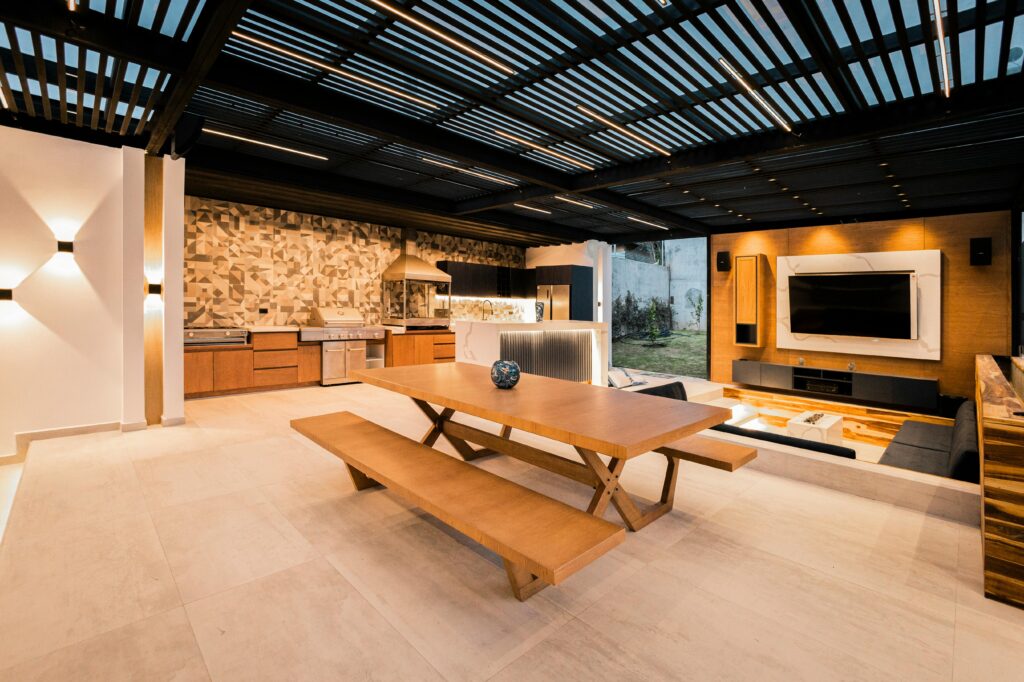
To build an outdoor TV lift cabinet, you must design a sealed cabinet sized for both the television and a motorized lift mechanism, construct it using outdoor-rated materials, install the lift securely on a reinforced frame, and finish the cabinet with proper weatherproofing, ventilation, and electrical protection so it can operate safely outdoors.
Planning the Cabinet Before You Build
Good planning determines whether your cabinet operates smoothly for years or fails prematurely. Outdoor conditions magnify small design mistakes, so precision matters.
Determining Cabinet Dimensions
The cabinet must accommodate more than just the TV screen. You need space for vertical travel, wiring movement, and airflow.
When calculating dimensions, consider:
- The TV’s width, height, and depth with its mounting bracket
- The full extended height of the lift mechanism
- Extra clearance for cables and connectors
- Internal spacing for ventilation and drainage
Failing to account for lift travel height is one of the most common planning errors.
Choosing a Vertical or Tilting Design
Vertical pop-up cabinets are the most reliable option outdoors. They allow the TV to rise straight upward while keeping all seams sealed tightly. Tilting or flip-top designs introduce additional moving parts and exposure points, increasing the risk of water intrusion over time.
For most patios, decks, and pool areas, a vertical lift cabinet offers the best balance of durability and simplicity.
Selecting Outdoor-Safe Materials
Material selection directly affects how well the cabinet withstands moisture, heat, and UV exposure.
Structural Materials Explained
Not all “wood” is suitable for outdoor use. Indoor-grade materials break down quickly when exposed to humidity and temperature swings.
The most reliable cabinet materials include:
- Marine-grade plywood sealed on all sides
- Cellular PVC or composite boards
- Naturally rot-resistant hardwoods such as teak or ipe
These materials resist swelling, cracking, and insect damage when properly finished.
Hardware and Fasteners
Outdoor environments accelerate corrosion. Every fastener should be chosen with longevity in mind.
Use stainless steel or coated outdoor-rated hardware exclusively. Hinges, screws, bolts, and brackets should all be rust-resistant to prevent structural weakening over time.
Choosing the Right TV Lift Mechanism
The lift mechanism is the heart of the cabinet. Selecting the wrong one leads to jerky motion, noise, or early motor failure.
Weight Capacity and Lift Height
A lift should always exceed the TV’s actual weight. A safety margin ensures smooth motion and reduces motor strain.
Before purchasing a lift, confirm:
- Weight rating exceeds TV weight by at least 25%
- Lift height matches cabinet depth and viewing needs
- Mounting brackets support the TV’s VESA pattern
Underpowered lifts are one of the most expensive mistakes to correct later.
Control and Power Options
Most outdoor TV lifts run on standard household power. Control options vary and should be chosen based on convenience and environment.
Common options include:
- Wired wall switches for reliability
- RF remotes that don’t require line-of-sight
- Smart home integrations for advanced setups
Outdoor-rated control components should always be used to avoid moisture-related failures.
Step-by-Step Cabinet Construction Overview
Construction should follow a logical sequence to avoid rework and alignment issues.
Building the Internal Frame
The internal frame must remain rigid under load to keep the lift perfectly vertical. Even minor flex can cause binding or uneven movement.
Start by constructing a reinforced rectangular base, then add vertical supports where the lift will mount. All corners should be square and secured tightly to maintain alignment.
Installing the Lift Mechanism
The lift should be installed before enclosing the cabinet. This allows for adjustment and testing.
Mount the lift directly to structural members rather than thin panels. Once installed, run several test cycles to ensure smooth extension and retraction before proceeding.
Mounting the Television
The TV mounts directly to the lift’s bracket. Cable routing is critical at this stage.
Leave enough slack in power and HDMI cables to allow full lift movement without strain. Secure cables neatly along the frame to prevent snagging.
Weatherproofing and Ventilation Strategy
A fully sealed cabinet without airflow can trap heat and moisture, damaging electronics just as quickly as rain exposure.
Sealing Against Moisture
All joints, seams, and panel connections must be sealed thoroughly. Use exterior-grade sealants and waterproof adhesives where panels meet.
Access doors should include compression gaskets to block wind-driven rain while still allowing service access.
Ventilation and Drainage Design
Ventilation openings should be discreet and downward-facing to block rain intrusion. Drain holes at the base allow condensation to escape naturally.
Electronics should always be elevated slightly off the cabinet floor to avoid contact with standing water in extreme conditions.
Electrical Safety for Outdoor Installations
Electricity and moisture are a dangerous combination without proper precautions.
Outdoor Power Requirements
All power sources should be GFCI-protected. Use weatherproof electrical boxes and outdoor-rated conduit where wiring enters the cabinet.
These measures significantly reduce the risk of electrical shock and equipment damage.
Surge Protection and Cable Management
Outdoor electronics are more vulnerable to power surges caused by storms. A surge protector rated for outdoor or semi-outdoor use is essential.
Create drip loops in all cables to prevent water from traveling along wiring into electrical components.
Comparison Table: DIY vs Professional Build
The table below helps clarify whether building your own cabinet or hiring a professional is the better choice.
| Factor | DIY Build | Professional Build |
|---|---|---|
| Cost | Lower upfront cost | Higher initial investment |
| Customization | Fully customizable | Limited to available designs |
| Time Commitment | Several weekends | Faster completion |
| Skill Requirement | Moderate to advanced | No DIY skill needed |
| Long-Term Reliability | Depends on execution | Typically higher |
This comparison helps align expectations with budget, skill level, and desired outcome.
Common Mistakes to Avoid
Many outdoor TV cabinets fail due to preventable oversights rather than material defects.
Structural Errors
Common structural mistakes include mounting lifts to thin panels, skipping internal reinforcement, or misaligning the frame. These errors often cause lift binding or uneven motion.
Environmental Oversights
Ignoring ventilation, skipping UV protection, or using indoor materials outdoors drastically shortens cabinet lifespan. Outdoor exposure is unforgiving, even in mild climates.
Cost Expectations and Time Investment
Understanding the scope of the project helps avoid frustration.
Typical Cost Range
Costs vary based on size and materials, but most builds include expenses for the lift mechanism, cabinet materials, finishes, and electrical components. DIY projects save labor costs but require careful execution.
When Professional Help Makes Sense
Professional fabrication is worth considering for large TVs, stone or masonry integration, or complex electrical setups. In these cases, professional installation improves safety and longevity.
For fresh updates and inspiration, browse our outdoor resources.
Frequently Asked Questions About Outdoor TV Lift Cabinets
Below are common questions homeowners ask when planning or building an outdoor TV lift cabinet.
Can a regular TV be used in an outdoor lift cabinet?
A regular TV can be used if the cabinet is fully sealed and ventilated, but outdoor-rated TVs perform better under temperature and humidity fluctuations.
Do outdoor TV lift cabinets need ventilation?
Yes, ventilation prevents heat buildup and condensation, both of which can damage electronics even in sealed enclosures.
How long does a TV lift mechanism last outdoors?
A high-quality lift rated for outdoor or semi-outdoor use can last many years if protected from moisture and not overloaded.
Is it safe to leave the TV outside year-round?
A properly built cabinet can protect a TV year-round, but extreme climates may still benefit from seasonal precautions or covers.
How high should the TV lift extend?
The TV should rise to seated eye level, typically placing the bottom of the screen around 40–50 inches from the ground depending on furniture height.
These answers clarify common concerns and help homeowners make informed decisions before starting a build.
Conclusion
An outdoor TV lift cabinet combines smart design, weatherproof construction, and careful installation to protect electronics while enhancing outdoor living, making proper planning and material selection essential for long-term success.