Outdoor string lights create ambiance, safety, and charm in gardens, patios, and pathways. They provide decorative appeal while illuminating outdoor areas for gatherings, holidays, or simple relaxation.
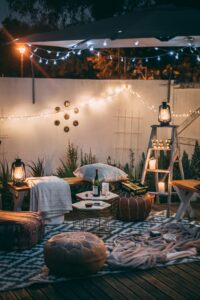
How Many Outdoor Lights can you String Together?
The number of lights you can safely connect depends on the bulb type, total wattage, and manufacturer specifications. Each light type has a recommended maximum per strand, which is set to prevent excessive electrical load.
For example, LED lights consume far less power than incandescent bulbs, allowing longer strings. Always follow manufacturer limits, even if the electrical circuit can theoretically handle more.
Other factors affecting the number of lights include wire thickness, outdoor rating, and the use of extension cords. Outdoor-rated lights are designed to resist moisture, sunlight, and temperature fluctuations, which is critical for safety.
Using indoor lights outside can lead to insulation breakdown, short circuits, or hazards during wet conditions.
Key Factors That Affect Stringing Limits
Several essential factors determine how many lights you can safely connect end-to-end:
- Bulb Type: LED lights use less energy and can handle more bulbs per strand than incandescent.
- Voltage Rating: Mixing voltages reduces safety and can damage bulbs or sockets.
- Wattage per Bulb: Higher wattage bulbs draw more current, limiting the number of bulbs per string.
- Outdoor Rating: Only use lights specifically rated for outdoor use.
- Circuit Capacity: Standard household circuits (typically 15–20 amps) have maximum load limits; overloading can trip breakers or create fire risks.
By accounting for these factors, you can safely plan your outdoor lighting design and avoid common mistakes.
Learn how to add a photocell to an outdoor light?
Typical Stringing Limits for Various Light Types
Different types of outdoor string lights have varying electrical capacities, and knowing their typical maximums helps you plan a safe and efficient installation.
This section outlines common limits for LED and incandescent lights, so you can avoid overloading strands while achieving the desired lighting effect.
| Light Type | Typical Max Lights per Strand | Notes |
|---|---|---|
| LED Mini Lights | 200–300 | Low wattage; longer strings are possible |
| LED C7/C9 Bulbs | 25–50 | Larger decorative bulbs; check wattage |
| Incandescent Mini | 50–100 | Higher wattage; shorter strings required |
| Incandescent C7/C9 | 10–25 | Large bulbs; risk of overheating |
This table provides a guideline for common outdoor string lights. Always refer to the product packaging for exact maximum limits, as variations exist across brands and styles.
Calculating Maximum Lights for Your Circuit
To calculate how many lights your circuit can handle:
- Check wattage per bulb: Usually printed on packaging or the bulb base.
- Determine maximum load: Know the amperage rating of your string or household circuit.
- Use the formula:
Maximum bulbs = (Circuit Amperage × Voltage) ÷ Wattage per Bulb
For example, a 15-amp, 120V circuit powering 5W LED bulbs:
15 × 120 ÷ 5 = 360 bulbs maximum (theoretical).
However, always follow the manufacturer’s recommended maximum, which may be lower than this theoretical number due to built-in safety factors.
Installation Tips for Safe Outdoor String Lighting
Correct installation not only ensures safety but also maintains consistent brightness and extends the lifespan of your lights.
- Use outdoor-rated extension cords suitable for the length and amperage of your string lights.
- Hang lights with hooks, clips, or poles rather than nails or staples to prevent wire damage.
- Avoid overlapping or twisting wires, which can cause hot spots or breakage.
- Install GFCI outlets for all outdoor circuits to prevent electrical shock, especially in wet conditions.
- Test all lights before installation to ensure every bulb works and connections are secure.
Proper planning of the layout, with secure hanging and safe electrical practices, is essential for both aesthetics and hazard prevention.
Common Mistakes to Avoid
Even minor mistakes can lead to hazards or reduced lighting performance. Avoid the following:
- Overloading strands beyond the manufacturer-recommended limit.
- Using indoor-only lights in outdoor environments.
- Connecting different types of bulbs (LED + incandescent) on the same string.
- Neglecting weatherproofing for plugs, sockets, or connections.
- Placing lights near flammable materials such as dry leaves or wooden decking.
Being aware of these common mistakes ensures your outdoor lighting remains safe and reliable.
Energy Efficiency and LED vs Incandescent Lights
LED lights are more energy-efficient and generate less heat than incandescent lights, which allows longer strands and reduced fire risk. For example:
- LED Mini Lights: Consume 80–90% less energy than incandescent equivalents.
- LED C7/C9 Bulbs: Provide bright decorative lighting with minimal electrical load.
- Incandescent Lights: Produce more heat and require shorter strings to avoid overloading.
Choosing energy-efficient lighting reduces your electricity bill, increases strand longevity, and allows safer, longer setups.
For regular updates and gear recommendations, see our articles and guides section.
LED vs Incandescent Maximum String Length Comparison
This table compares the maximum recommended string lengths for LED and incandescent lights to help you plan safe and efficient lighting setups.
| Light Type | Max Lights per Strand | Energy Use | Heat Generated | Ideal Use Case |
|---|---|---|---|---|
| LED Mini Lights | 200–300 | Low | Minimal | Decorative long strands |
| LED C7/C9 Bulbs | 25–50 | Low | Minimal | Outdoor holiday displays |
| Incandescent Mini | 50–100 | High | High | Short festive strands |
| Incandescent C7/C9 | 10–25 | High | High | Small decorative areas |
By understanding these differences, you can choose the right type of lighting to achieve your desired brightness while avoiding overloads and ensuring long-term safety.
Outdoor Lighting Safety Checklist
To ensure safe stringing and maintenance:
- Confirm manufacturer’s maximum bulbs per strand.
- Use outdoor-rated bulbs and extension cords.
- Check wattage and circuit capacity before connecting multiple strands.
- Inspect strings for damage or frayed wires regularly.
- Keep lights clear of water, plants, and flammable materials.
Following this checklist prevents hazards and ensures long-lasting, safe illumination.
FAQs
Here are key questions homeowners often ask about outdoor string lighting:
Can I mix LED and incandescent lights on the same string?
No, mixing light types can create uneven load, overheating, or blown fuses. Always use a single type per strand.
How many LED string lights can I safely connect end-to-end?
Most LED mini lights allow 200–300 bulbs per strand, but always follow the manufacturer’s specified maximum.
What happens if I exceed the maximum number of lights?
Exceeding limits can cause overheating, tripped breakers, blown fuses, or even fire hazards.
Can outdoor extension cords be used for string lights?
Yes, but ensure they are outdoor-rated and appropriate for the amperage and length of your lights.
Do I need a GFCI outlet for outdoor lights?
Yes, GFCI outlets prevent electrical shocks, particularly in wet outdoor conditions.
Conclusion
The number of outdoor lights you can safely string together depends on bulb type, wattage, voltage, and circuit capacity. By understanding these factors, following manufacturer guidelines, and practicing safe installation, you can enjoy beautiful and hazard-free outdoor lighting. Proper planning, energy-efficient choices, and seasonal maintenance make outdoor string lighting both safe and visually appealing.